Saturday, 6 June 2026 | Tatu City, Kenya
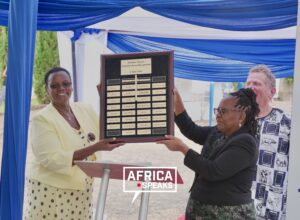
Printstar Publishers SEZ Ltd officially launched its large-volume Bible printing facility on Saturday, 6th June 2026, bringing together leaders from Bible societies, translation organisations, publishing houses, ministries, government, and Christian publishing networks from across Africa and beyond. In capturing the significance of the occasion, Alice Ruhiu, Chief Executive Officer of Printstar Publishers SEZ Ltd, declared:
“Africa has the faith. Africa has the people. Now Africa has the press.”
The statement reflected the broader significance of the launch. While Africa has become one of the world’s most significant centres of Christian growth, much of the large-scale production capacity needed to print Bibles has historically been located outside the continent. Against that backdrop, the establishment of a large-volume Bible printing facility in Kenya represents an important investment in the infrastructure that supports Bible translation, production, distribution, and access.
Large-volume Bible printing is not entirely new to Africa. Previous Bible printing facilities operated in South Africa and Morocco, though both have since ceased operations. The launch of Printstar, therefore, marks an important new chapter in strengthening Bible production capacity on the continent.

A Gathering of the Publishing Ecosystem
The launch brought together representatives from across the Bible publishing ecosystem, including United Bible Societies (UBS), Bible Society South Sudan, The Timothy Project, CLC Kenya, Timazi Africa, the Publishing Institute of Africa, government agencies, publishers, translators, and ministry leaders. The gathering reflected the collaboration required to move Scripture from translation to publication, distribution, and readership. Representing the Government of Kenya, Matthew Kipkosgei emphasised the role of local manufacturing and industrial investment in supporting economic growth and job creation.
Vision, Partnership, and Capacity
The event was led by Alice Ruhiu, Chief Executive Officer and Co-founder of Printstar Publishers SEZ Ltd, and Reuben Weche, Chairman of Printstar Publishers SEZ Ltd, who shared the vision and journey behind the establishment of the facility. Addressing guests during the launch, Alice Ruhiu reflected on another dimension of the moment:
“We are standing on Kenyan soil. African soil. And we are here to say, out loud and in front of witnesses, that the Bible that reaches the hands of the African church will from this place be printed in Africa.”
Her remarks spoke to a challenge that many Bible agencies and publishers have navigated for years: serving African readers through production systems largely located outside the continent. The launch of Printstar represents an effort to strengthen local capacity and bring a critical part of the publishing value chain closer to the communities it serves. Representatives from The Timothy Project, Pastor Paul Newman and Dr. Paul Ishiara, reflected on their journey alongside Printstar and the partnerships, long-term commitment, and investment that brought the vision to life.
From Translation to Transformation
Several speakers highlighted the close relationship between Bible translation, production, distribution, and engagement. Prof. Jean-Claude Loba-Mkole of United Bible Societies situated the launch within the broader history of Scripture transmission on the continent, noting:
“Africa has played a critical role in the preservation and transmission of the Word of God in oral and written formats.”
He further observed that Printstar arrives at an important moment for Africa, supporting the production, publication, and distribution of Scripture and related scholarly works across the continent. Cecilia Kaiwa of Bible Society South Sudan spoke to the realities of Bible access in emerging and underserved contexts, underscoring the importance of reliable production capacity closer to the communities being served. One of the day’s most memorable reflections came from Maggie Gathuku of Timazi Africa:
“It is one thing to have a Bible in every home, but it is another thing for that Bible to be read in every home, and a whole other thing for that reading to shape how we live.”
Her remarks offered an important reminder that the work of Bible publishing extends beyond making Scripture available. The ultimate aim is for people to engage with God’s Word in ways that shape lives, families, and communities. The launch was also attended by respected leaders from the wider publishing community, including Dr. Muthoni Omukhango of CLC Kenya and Dr. Kirimi Barine of the Publishing Institute of Africa, who are members of the Africa Speaks community.
Strengthening Bible Publishing Capacity in Africa
The significance of this investment extends beyond printing capacity. It addresses a longstanding shortage of large-volume Bible printing infrastructure within Africa at a time when translation activity across the continent is expanding rapidly. As more language communities receive Scripture in their heart languages, the challenge increasingly shifts from translation to scale – how to produce, distribute, and sustain access to those translations efficiently and affordably.
By strengthening local production capacity, Printstar Publishers has the potential to reduce dependence on overseas printing, shorten supply chains, improve responsiveness to market needs, and create greater resilience within the publishing ecosystem. It also positions Africa to play a more active role in shaping its own publishing future rather than relying primarily on infrastructure located in other continents.
Perhaps most importantly, the launch highlighted a growing recognition that the future of Bible access will depend on stronger integration across the entire value chain. Translation, publishing, manufacturing, distribution, and Scripture engagement can no longer be viewed as separate activities. The organisations represented at the event reflected an emerging ecosystem mindset—one that recognizes that lasting impact is achieved when each part of the chain is strengthened and aligned.
In that sense, the facility represents not only a manufacturing milestone, but also a strategic investment in the capacity of the African church to fulfil the Great Commission by making God’s Word more accessible in its call to “go and make disciples of all nations.”