For publishers in Kenya and across Africa, developing a reading culture is inseparable from the work of publishing. We can produce strong, relevant books, but their value is realised only when they reach readers who have the interest, access and support to engage them. Among young people in Kenya and Africa, that journey often begins in school.
In many African schools, the relationship between students and books is shaped by necessity. Reading is organised around the syllabus, prescribed texts and examinations. A book is approached because it must be studied, its themes identified and its contents recalled well enough to secure a grade. Once the examination is over, the reading often ends with it.
This does not mean that young people are unwilling to read. It points instead to a wider challenge: a reading culture cannot be sustained by instruction alone. Young people must have access to books that speak to their lives, opportunities to engage those books beyond the classroom and communities that treat reading as a meaningful pursuit rather than merely an academic obligation.
The Timazi Africa Readership Challenge was created with this concern in view. Timazi Africa Africa is a Kenya-based Christian ministry that works among high school students, helping them know, love and live for Christ through discipleship programmes and resources. Its work includes Timazi Africa magazine, a Bible Reading Programme, the Mwalimu Bora teacher-formation programme and the annual Readership Challenge.
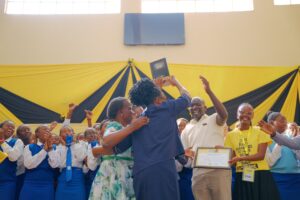
The Readership Challenge has been part of Timazi Africa’s ministry for more than a decade. It began in 2013 in response to concerns about Kenya’s declining reading culture and the tendency among students to read primarily for examinations. From its early years, the programme combined the reading of a selected Christian book with written reflection and an Awards Gala celebrating both students and schools. By its fourth edition in 2016, the Challenge was already bringing together more than 100 schools, showing how a focused reading programme could grow into a significant platform for Christian discipleship and youth readership development.
A book that speaks to the teenage years
The 2026 Challenge centered on This Changes Everything: How the Gospel Transforms the Teen Years by Jaquelle Crowe. Written by a teenager for her peers, the book confronts the low expectations often attached to adolescence. It rejects the assumption that the teenage years are simply a period to be endured before serious Christian responsibility begins.
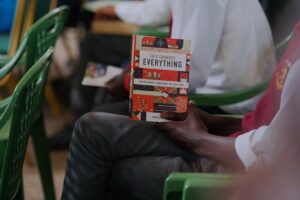
Instead, Crowe asks what it would mean for the gospel to shape a young person’s life now: their relationships, use of time, habits, response to sin and understanding of purpose.
Under the participation process, students read the book and submitted reports to their school patrons or chaplains. Each school then nominated five students to represent it in the Timazi Readership Challenge.
The book report is an important part of the model. Finishing a book demonstrates discipline; writing about it demands something further. Students must identify the author’s argument, distinguish central ideas from supporting material, decide what they agree or disagree with, and communicate their response coherently.
This is especially valuable at a time when much of the information young people encounter is brief, immediate and rapidly replaced by the next piece of content. Long-form reading asks for a different kind of attention.
Creating the conditions in which reading can take root
The Readership Challenge also recognises that reading habits do not develop in isolation. A student is more likely to complete and engage a book when the book is accessible, the task is purposeful and trusted adults take an interest in the process.
By working through schools and involving patrons and chaplains, Timazi Africa places a support structure around the reader. Students participate alongside their peers. Schools identify and encourage their representatives. The national stage gives them a goal towards which to work, while the Awards Gala publicly recognises an achievement that is often private and largely unseen: the sustained work of reading, thinking and writing.
This public recognition matters. Sporting, artistic and academic achievement have familiar platforms for celebration. Reading is less visible. It usually happens quietly and produces no immediate spectacle. By gathering students around books and honouring their engagement, the Challenge makes reading a social and aspirational activity. It allows a young person to see that being a serious reader is an identity worth claiming.
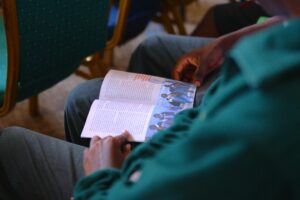
The competitive element gives the programme energy, but competition is not its ultimate purpose. Timazi Africa describes the Challenge as an effort to build a healthy reading culture among high school students. At its heart is a conviction familiar to publishers: reading can enlarge a young person’s world, strengthen the ability to think and communicate, and provide sustained engagement with ideas that shape faith and character.
The programme is equally deliberate about the kind of literature placed before students. For Timazi Africa Africa, Christian literature is part of the discipleship of young people. For those of us involved in publishing, this is one of the enduring strengths of the book. It can carry a sustained theological and moral argument into the daily life of a student.
The continuing development of initiatives such as the Readership Challenge therefore raises an important question for us as African Christian publishers: are we producing enough relevant, compelling and accessible books for the continent’s young readers—and are we doing enough to help those books find them?
From publishing books to developing readers: An invitation to publishers for 2027
The 2026 Challenge offers our publishing community a practical view of the distance between producing a book and creating a readership for it. Good content is indispensable, but it does not move by itself. A book must be discovered, made affordable and placed within reach of the people for whom it was written.
For students, the barriers may be especially pronounced. They may have limited purchasing power, few opportunities to browse a well-stocked bookshop and little awareness of titles outside the school syllabus. Distribution remains uneven, and even an excellent book can fail to reach its intended audience.
Programmes such as the Timazi Africa Readership Challenge help close this gap by bringing publishers, authors and young readers together. They give you, the publisher, an opportunity to see how students respond to Christian literature, understand what resonates with them and support their growth as thoughtful, lifelong readers.
For the Africa Speaks publishing community, the 2027 Readership Challenge presents an opportunity to invest in that longer story. It is a chance to help move books beyond warehouses and shelves and into the hands, conversations and lives of young people.

Publishers interested in partnering with Timazi Africa on opportunities to host the Readership Challenge, offer titles for future Challenges can email Tabby Kimani or WhatsApp +254 705 182 141. Timazi Africa’s goal is to open the Readership Challenge to students across Africa.