Same region and yet another crisis
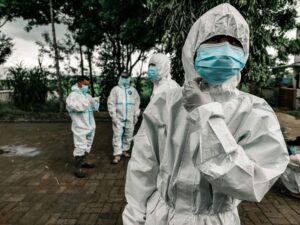
On May 15th, 2026, a new Ebola epidemy was declared in Northeastern DRC precisely in the Ituri province. While this is the 17th Ebola outbreak in the region, the actual epidemy is caused by a different variant of the disease; a virus named after the “Bundibugyo” region in Uganda where it was first discovered.
Ebola disease is a rare, severe, and often fatal illness in humans and primates caused by a group of viruses known as orthoebolaviruses. Classified as a viral hemorrhagic fever, the infection causes intense body inflammation, tissue damage, and disruptions to the blood clotting system, which can lead to internal and external bleeding.
Compared to the Zaire Virus that spread out during the 2018-2020 outbreak in Eastern DRC, Bundibugyo Ebola currently has no vaccine and no approved treatment.
Moreover, the situation is even more alarming because of the fast spread of the disease that has, in the less than 10 days, claimed more than 200 suspected deaths, 101 confirmed cases, 906 suspected cases and 10 confirmed deaths in Eastern DRC alone according to the Congolese Ministry of Health.
The epidemy, that started in the Ituri province, quickly spread in the North-Kivu province where the cities of Butembo and Goma have both one confirmed case according to the same report.
To make matters worse, a recent report from the European Centre for Disease Prevention and Control has shown that the epidemy’s expansion didn’t take long before crossing into the neighboring country of Uganda where, so far, 7 cases and at least one death have been confirmed.
While the DRC and Uganda together with South-Soudan signed a regional coordination agreement to combat the disease after a series of meetings from May 22nd to May 23rd 2026, its rapid spread has led governments in the region to take some radical decision, affecting travel within the region. These decisions range from reinforced border health control to total closure of borders between neighboring countries to try and contain a further expansion of the disease.
The Rwandan government closed its borders with DRC on May 17th; 2 days following the outbreak’s declaration. Uganda took the same measure 10 days after Rwanda further deteriorating an extremely volatile socioeconomical situation in the region caused by the ongoing conflict and humanitarian crisis in Eastern DRC.
Socioeconomical ramifications of the outbreak in the conflict-torn region
Eastern DRC has been the theater of 30 years of conflicts that have caused one of the greatest humanitarian crises in the world today. This ongoing crisis has led to the internal displacement of over 7 million people within the affected provinces of the North-Kivu, South-Kivu and Ituri where the Ebola epidemy has just broken out.
Things worsened in January 2025 when, after conquering vast areas of Eastern DRC, the M23 rebel group took over the city of Goma, prompting the Congolese government to close all financial institutions operating there. The airport in this major economic and humanitarian hub of the region also remains inoperative. Since then, economic activity has remained sluggish in the capital city of North-Kivu. It didn’t take long before the same armed group conquered the city of Bukavu, the neighboring capital of the South-Kivu province.
With no access to banking services for more than a year, people in these two cities have relied on the free movement of persons between borders to access cash from neighboring countries and government-controlled zones.
Because of the closure of borders between DRC and both Rwanda and Uganda followed by a recent decision by the M23 to prevent travels between Goma, Bukavu and the government-controlled zones; the two cities have been completely isolated from the rest of the world and cut off from the precious lifeline provided by the free movement of people.
Some people fear that if the current situation goes on for more than two months, Goma and Bukavu may soon run out of cash, thus worsening an already challenging socioeconomical situation. Prices of goods have increased, and the security situation in all three provinces remains volatile. Fear has grown even more because no vaccine or treatment currently exists for this variant of Ebola.
Dr. Peter Stafford, an American Missionary working with Serge, contracted the disease while treating an infected patient at Nyankunde Hospital in the city of Bunia, Ituri Province. On May 19th, he was safely evacuated to Germany, where he was later joined by his wife and four children, who had been staying with him in Bunia. He is currently receiving specialized treatment and the latest updates confirm that he is slowly recovering. Two of his Congolese colleagues were tested positive and remained behind at the outbreak epicenter.
At the same time, some people in the region remain careless and skeptical towards the real existence of the disease, further increasing the risk of quick propagation. Churches in the most affected areas are avoiding to perform ordinances such as baptism to avoid contact with people that may be contaminated. Commendable efforts by churches and ministries operating in the region include raising community awareness about the disease and its prevention measures by regularly communicating about it from the pulpit, and setting up disease screening post at churches’ gates comprised of temperature checking and hands cleaning stations. So far, this has been minimal compared to how fast the disease is spreading.
Hope still remains
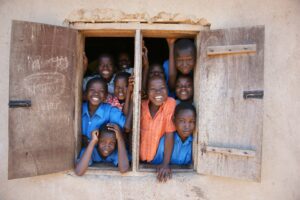
In times such as these, passages like Exodus 15:26b and Jeremiah 17:17 are beacons of hope for people who have lived through a series of calamities for a long period like those in Eastern DRC. They remind us that God is our ultimate source of healing (Exodus 15:26b) and He remains our refuge in the day of disaster (Jeremiah 17:17). As we conclude this article, we kindly ask you to join Africa Speaks in humbling ourselves before God and praying for the following items:
- That the current efforts to contain and stop the spread of the disease may be successful.
- That a treatment and vaccine for this variant of Ebola may quickly be found
- That peace may be restored in the Great Lakes region allowing for an easy and quick response when crises like the Ebola epidemy arise.
- That God may comfort those who have lost their owns because of the epidemy and the ongoing conflict in the region.
- That God may continue to provide for the people of Goma and Bukavu whose economic situation has worsened due to the further isolation caused by the Ebola outbreak.
- That people in the region may not give in to despair but continue to be comforted by the Good News that God is still at work even when reality seems to suggest otherwise.