Printstar Launches Large-Volume Bible Printing Facility in Kenya

author profile image
Article By Africa Speaks

Saturday, 6 June 2026 | Tatu City, Kenya 

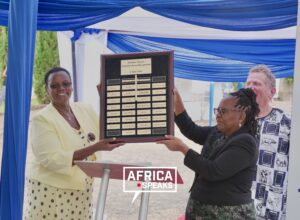
Printstar Publishers SEZ Ltd officially launched its large-volume Bible printing facility on Saturday, 6th June 2026, bringing together leaders from Bible societies, translation organisations, publishing houses, ministries, government, and Christian publishing networks from across Africa and beyond. In capturing the significance of the occasion, Alice Ruhiu, Chief Executive Officer of Printstar Publishers SEZ Ltd, declared: 

“Africa has the faith. Africa has the people. Now Africa has the press.” 

The statement reflected the broader significance of the launch. While Africa has become one of the world’s most significant centres of Christian growth, much of the large-scale production capacity needed to print Bibles has historically been located outside the continent. Against that backdrop, the establishment of a large-volume Bible printing facility in Kenya represents an important investment in the infrastructure that supports Bible translation, production, distribution, and access. 

Large-volume Bible printing is not entirely new to Africa. Previous Bible printing facilities operated in South Africa and Morocco, though both have since ceased operations. The launch of Printstar, therefore, marks an important new chapter in strengthening Bible production capacity on the continent. 

A Gathering of the Publishing Ecosystem 

The launch brought together representatives from across the Bible publishing ecosystem, including United Bible Societies (UBS), Bible Society South Sudan, The Timothy Project, CLC Kenya, Timazi Africa, the Publishing Institute of Africa, government agencies, publishers, translators, and ministry leaders.  The gathering reflected the collaboration required to move Scripture from translation to publication, distribution, and readership. Representing the Government of Kenya, Matthew Kipkosgei emphasised the role of local manufacturing and industrial investment in supporting economic growth and job creation. 

Vision, Partnership, and Capacity 

The event was led by Alice Ruhiu, Chief Executive Officer and Co-founder of Printstar Publishers SEZ Ltd, and Reuben Weche, Chairman of Printstar Publishers SEZ Ltd, who shared the vision and journey behind the establishment of the facility.  Addressing guests during the launch, Alice Ruhiu reflected on another dimension of the moment: 

“We are standing on Kenyan soil. African soil. And we are here to say, out loud and in front of witnesses, that the Bible that reaches the hands of the African church will from this place be  printed in Africa.” 

Her remarks spoke to a challenge that many Bible agencies and publishers have navigated for years: serving African readers through production systems largely located outside the continent. The launch of Printstar represents an effort to strengthen local capacity and bring a critical part of the publishing value chain closer to the communities it serves. Representatives from The Timothy Project, Pastor Paul Newman and Dr. Paul Ishiara, reflected on their journey alongside Printstar and the partnerships, long-term commitment, and investment that brought the vision to life. 
From Translation to Transformation 

Several speakers highlighted the close relationship between Bible translation, production, distribution, and engagement.  Prof. Jean-Claude Loba-Mkole of United Bible Societies situated the launch within the broader history of Scripture transmission on the continent, noting: 

“Africa has played a critical role in the preservation and transmission of the Word of God in oral and written formats.” 

He further observed that Printstar arrives at an important moment for Africa, supporting the production, publication, and distribution of Scripture and related scholarly works across the continent.  Cecilia Kaiwa of Bible Society South Sudan spoke to the realities of Bible access in emerging and underserved contexts, underscoring the importance of reliable production capacity closer to the communities being served.  One of the day’s most memorable reflections came from Maggie Gathuku of Timazi Africa: 

“It is one thing to have a Bible in every home, but it is another thing for that Bible to be read in every home, and a whole other thing for that reading to shape how we live.” 

Her remarks offered an important reminder that the work of Bible publishing extends beyond making Scripture available. The ultimate aim is for people to engage with God’s Word in ways that shape lives, families, and communities.  The launch was also attended by respected leaders from the wider publishing community, including Dr. Muthoni Omukhango of CLC Kenya and Dr. Kirimi Barine of the Publishing Institute of Africa, who are members of the Africa Speaks community. 

Strengthening Bible Publishing Capacity in Africa 

The significance of this investment extends beyond printing capacity. It addresses a longstanding shortage of large-volume Bible printing infrastructure within Africa at a time when translation activity across the continent is expanding rapidly. As more language communities receive Scripture in their heart languages, the challenge increasingly shifts from translation to scale – how to produce, distribute, and sustain access to those translations efficiently and affordably. 

By strengthening local production capacity, Printstar Publishers has the potential to reduce dependence on overseas printing, shorten supply chains, improve responsiveness to market needs, and create greater resilience within the publishing ecosystem. It also positions Africa to play a more active role in shaping its own publishing future rather than relying primarily on infrastructure located in other continents. 

Perhaps most importantly, the launch highlighted a growing recognition that the future of Bible access will depend on stronger integration across the entire value chain. Translation, publishing, manufacturing, distribution, and Scripture engagement can no longer be viewed as separate activities. The organisations represented at the event reflected an emerging ecosystem mindset—one that recognizes that lasting impact is achieved when each part of the chain is strengthened and aligned. 

In that sense, the facility represents not only a manufacturing milestone, but also a strategic investment in the capacity of the African church to fulfil the Great Commission by making God’s Word more accessible in its call to “go and make disciples of all nations.” 

author profile image

Africa Speaks

PRAY FOR SUDAN

author profile image
Article By Africa Speaks

Sudan is facing one of the most devastating conflicts in recent history. Since April 2023, fierce fighting between the Sudanese Armed Forces (SAF) and the paramilitary Rapid Support Forces (RSF) has engulfed the country, plunging millions into danger, displacement, and despair. 

This violent conflict, intensified by external influences and deep-rooted political rivalries, has resulted in widespread atrocities, massive civilian casualties, and a humanitarian catastrophe demanding urgent global prayer and action.

A Nation in Crisis

The RSF recently captured key regions, including the city of El-Fasher in North Darfur, after prolonged and brutal sieges. Reports confirm mass killings, including the tragic loss of lives at hospitals and places of worship. Survivors recount harrowing stories of attacks on civilians, forced displacements, and destroyed homes. 

More than 14.5 million Sudanese have been uprooted—10.5 million inside the country and nearly 4 million across borders into neighboring nations like Egypt, South Sudan, Chad, Ethiopia, and others. Children and families face famine, disease outbreaks like cholera, and almost complete loss of healthcare and basic necessities.

The Suffering Church

Christians in Sudan, though a small minority making up about 4% of the population, suffer uniquely amidst this turmoil. Their churches and homes have been targeted; over 100 church buildings have been damaged, and many Christians abducted or killed. 

As the conflict worsens, the Christian community is scattered, with many displaced into overcrowded camps where survival is a daily struggle. Local discrimination often compounds their hardships, and foreign Christian aid workers have largely been forced to leave.

A Call to Intercede

For Christians across Africa and beyond, this moment calls for intentional and sustained prayer for Sudan. 

Firstly, pray for peace — that the fighting between the SAF and RSF will cease, that negotiations will succeed, and that Sudanese leaders will pursue dialogue over violence.

Secondly, lift in prayer the millions displaced and affected by hunger, disease, and fear, especially vulnerable groups such as women, children, and the persecuted Christian minority. Pray for their safety, provision, and that they may find shelter and hope even in the darkest circumstances.

Pray also for the believers in Sudan to remain strong and united. Despite persecution and hardship, the Church is a vital beacon of hope and resilience. Many Christians find themselves scattered without their possessions or support networks, and many local churches are struggling or in exile. Ask that God would comfort them, sustain their faith, and empower their witness for peace and reconciliation in their communities.

Lastly, pray for humanitarian workers, local and international, who risk their lives to bring aid, medical care, and spiritual support. The ongoing conflict impedes aid deliveries, worsening the crisis. Pray for courage, wisdom, and that essential supplies will reach those in urgent need.

Standing With Sudan

The Sudanese crisis is not distant or unnoticed; it is a profound human tragedy that requires compassionate awareness and prayerful intercession. As fellow believers, Christians across Africa can stand in solidarity with Sudanese brothers and sisters by lifting them in prayer, advocating for peace, and supporting humanitarian efforts. May these prayers be a lifeline of hope and a call to action until peace and healing come to Sudan.

author profile image

Africa Speaks

PRAY FOR TANZANIA

author profile image
Article By Africa Speaks
 A Nation in Fear

“We are safe but in great fear,” Our friend from Tanzania shared. 

 “An urgent intercession is requested from the global community of faith: to pray fervently for immediate divine intervention regarding food and physical safety for the struggling citizens and their families.” 

 Another adds, 

“Shops, petrol stations, and polling centers linked to the ruling party were burned. Lives have been lost. The internet was off for 26 hours, and we’re under a 6 pm curfew. Pray for calmness of mind—hearing gunshots every so often is terrifying.” 

(Join the Africa Speaks community here to hear more exclusive reports from our friends in Tanzania and learn how you can pray with them.) 

These few words, sent from believers in Tanzania this week, carry the weight of a nation on edge and paints a vivid picture of what Tanzanians are experiencing in the wake of their October 2025 general elections. What began as post-election unrest has now spiraled into a humanitarian crisis marked by food shortages, violence, and fear. 

From Dar es Salaam to Arusha, life has been brought to an abrupt halt. Government-imposed curfews and lockdown measures in response to election unrest have left many daily wage earners unable to work. Roads were blocked, businesses suspended, and key transport links disrupted, deepening the economic strain across the country.

The Silence of a Nation Under Siege 

What makes the crisis even more terrifying is the total information blackout. For more than 30hours, Tanzanians have been cut off from the internet, SMS, and international calls.

“Only what is allowed to come from the outside world is money through cell phones,” wrote another believer, describing how streets are reportedly littered with bodies after days of gunfire. 

“Masked, armed individuals—watu wasiojulikana—are executing citizens in broad daylight… we are passing through death,” he adds.

While Zanzibar and some Muslim-majority regions remain relatively calm, much of mainland Tanzania is described as “a spiritual battle — a war between light and darkness, righteousness and evil.”  

Unrest and Uncertainty After Elections  

The country held its general elections amid charges that critical opposition parties were barred from participating, and that voting lacked meaningful competition. On election day and in the days following, major cities such as Dar es Salaam and Arusha experienced large-scale protests, polling stations were attacked, roads were blocked, and security forces, including the army, were deployed.  

Meanwhile, internet services were shut down nationwide, curfews enforced, and many citizens were left uncertain and fearful. 

Why It Matters to Us 

For those of us in the African publishing community, such unrest is not distant news, it affects our very work. Our mission, to build a flourishing Christian publishing industry and share the gospel — is directly challenged by instability. That’s why, beyond concern, we must respond with prayer. 

Indeed, this is a moment to lift Tanzania before God.  

Let us pray: 

  • For restoration of peace and order in Tanzania. 
  • For leaders with wisdom and restraint to guide the nation forward. 
  • For protection and comfort for those living in fear and loss. 
  • For the spread of the gospel even in the face of instability — that hope in Christ may reach every corner. 

 God wills shalom for Africa. As we pray for her welfare, may God restore calm, and may we be reminded that the welfare of our nations is deeply tied to our own. 

“Seek the welfare of the city where I have sent you into exile, and pray to the Lord on its behalf, for in its welfare you will find your welfare.” — Jeremiah 29:7 (ESV)

author profile image

Africa Speaks